
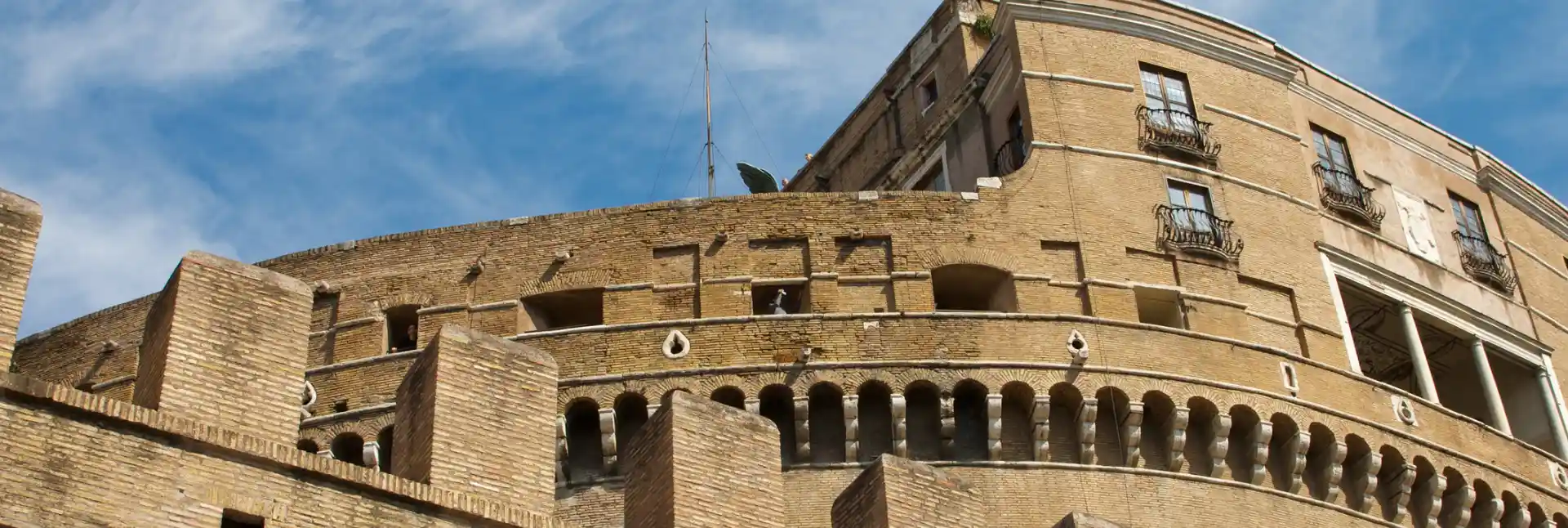
What to see at Castel Sant’Angelo: a tour by levels and rooms
If you want to explore one of the most fascinating and complex monuments in Rome, you must visit Castel Sant’Angelo. It is not just a fortress or a museum; it is one of the buildings that has changed its function the most over nearly two thousand years: imperial mausoleum, fortress, papal residence, prison and, today, a national museum. To truly enjoy and understand it, it is essential to be familiar with the route through Castel Sant’Angelo.
The levels of Castel Sant’Angelo
Access to the castle and the original Roman spaces
The tour of Castel Sant’Angelo begins with a clear reference to its original function as the mausoleum of Emperor Hadrian, built in the 2nd century AD. As soon as you enter, you will notice wide corridors with a Roman structural layout, where the solidity of the walls marks the beginning of the visit.
One of the most distinctive features is the large internal circular corridor, which allows visitors to walk around the cylindrical shape of the building and understand its original funerary design. These spaces were conceived to be decorative, but also solemn and long-lasting.
Here you can also clearly see how, over the centuries, Roman architecture was adapted to new functions without losing its structural essence. It is the perfect introduction to understanding the monument’s historical complexity.
Passageways, ramps and defensive areas
As you move forward along the route through Castel Sant’Angelo, you begin to encounter the internal ramps and passageways, essential elements in the transformation of the mausoleum into a fortress. These spaces allowed the internal movement of people, troops and supplies, and walking through them today feels like traveling back in time.
You will notice that everything here was designed to resist, control and protect. The walls are thick, the openings strategic, and circulation is clearly planned for defensive purposes. Areas linked to surveillance and control can still be seen, helping to explain why Castel Sant’Angelo was a key element in the defense of Rome for centuries.
Spaces linked to its use as a prison
One of the most striking aspects of the visit is discovering that the castle also served as a prison, especially during the papal era. Along the route, you access austere rooms of very small dimensions that can feel truly oppressive, especially once you know their history.
The castle functioned as an instrument of power at the time, and since everyone knew what happened inside, it was always regarded with a sense of fear. Historical figures accused of political or religious crimes were imprisoned here, adding a dramatic and human dimension to the visit.
This contrast between spaces of power and places of confinement is one of the elements that makes the tour of Castel Sant’Angelo truly unique and particularly impactful.
Inner courtyards and service areas
As you walk through the building, you will also come across inner courtyards and open areas, which once served logistical and organizational purposes and remain surprising even today.
The courtyards help to break the sense of enclosure felt inside the castle and allow you to observe the structure from a different perspective. From here, it becomes easier to understand how the building functioned as a small fortified city, with service areas, storage spaces and internal organization.
From an architectural point of view, these spaces mark the transition toward more noble and decorated areas, anticipating the change in function the castle would undergo during the Renaissance.
Decorated rooms and the papal residence
Without a doubt, one of the highlights of the Castel Sant’Angelo route is the visit to the decorated rooms used by the popes. Here, the atmosphere changes completely: you move from gloomy prison cells to rooms filled with frescoes, stuccoes and ornamental details that reflect the artistic taste of the Renaissance and Baroque periods.
These rooms are a clear representation of papal power and opulence. Audience halls, private chambers and ceremonial spaces show how the castle became a secure refuge connected to the Vatican.
Visiting these rooms allows you to appreciate the contrast between the defensive function of the building and the need for comfort, luxury and symbolism of the papacy. It is one of the most surprising moments when visiting Castel Sant’Angelo.
The panoramic terrace and the archangel
The route reaches its climax on the upper terrace, perhaps the most iconic area of Castel Sant’Angelo. From here, you can enjoy one of the most impressive panoramic views of Rome, with the Vatican, the Tiber River and the historic center unfolding before your eyes—perfect for unforgettable photos.
Overlooking this space stands the famous statue of the Archangel Saint Michael, the symbol of the castle and a direct reference to the legend that gave it its name. This is the ideal place to pause, take in the city and conclude the visit with a complete perspective of Rome.
Reaching this point helps you understand why Castel Sant’Angelo has been, for centuries, a key landmark in the city, both physically and symbolically.
Tips for organizing your visit to Castel Sant’Angelo
To enjoy the route through Castel Sant’Angelo without rushing, we recommend planning your visit in advance. It is best to book tickets for Castel Sant’Angelo ahead of time, especially during high season, in order to avoid queues and secure your entry.
Allowing at least two hours gives you enough time to explore the spaces at a relaxed pace and appreciate both the architecture and the final views. If you want a more complete experience, a guided tour provides valuable historical and artistic context and is also a very engaging way to follow the route. We always recommend this option to those who want to go beyond a superficial visit and truly understand what they are experiencing. Don’t miss out on your tickets!